Customer Service Excellence
Overview
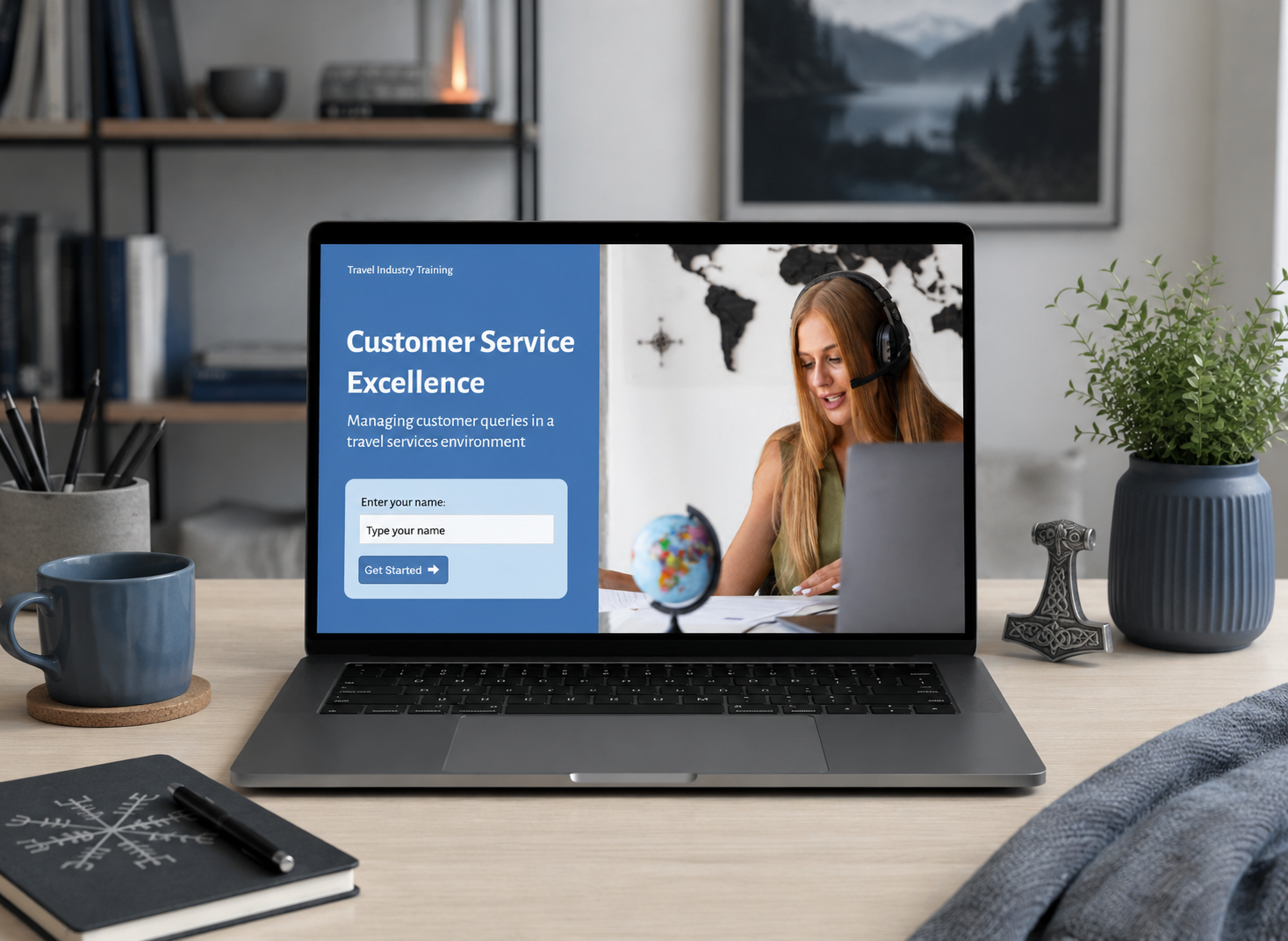
This scenario-based Storyline 360 module was designed to help customer service representatives practice responding to customer enquiries in a realistic workplace environment.
Through a series of decision points, learners experience how response times and communication choices influence customer satisfaction, trust, and long-term loyalty.
The experience combines branching scenarios, mentor-guided coaching, and visual feedback to create an engaging learning journey that demonstrates the real-world consequences of customer service decisions.
Go Travel has seen a decline in customer satisfaction due to inconsistent handling of customer enquiries and complaints.
Customers often experience delays in communication, leading to frustration, negative reviews, and reduced confidence in the company.
The organisation needed a learning solution that would help customer service representatives understand how their actions influence the customer experience and encourage more timely, customer-focused responses.
By the end of this module, learners will be able to:
- Explain how response times influence customer satisfaction and trust.
- Recognise the risks associated with delayed or absent customer communication.
- Select appropriate actions when responding to customer enquiries and complaints.
- Apply customer service principles to acknowledge and manage customer concerns effectively.
- Evaluate the consequences of different response strategies on customer loyalty and business outcomes.
- Demonstrate customer-centric behaviours that contribute to positive customer experiences.
Rather than presenting information through traditional content screens, the module places learners directly into a realistic workplace scenario. Learners receive an urgent customer complaint and must decide how to respond. Each decision triggers immediate feedback, visual changes in customer sentiment, and realistic business consequences.
A virtual mentor provides optional coaching throughout the experience, encouraging reflection and supporting decision-making without interrupting the flow of the scenario. This approach allows learners to safely explore the impact of their choices and build confidence through practice.
The final prototype demonstrates how scenario-based learning can be used to build customer service decision-making skills in a realistic workplace context. By allowing learners to experience both positive and negative consequences, the module encourages reflection, reinforces key customer service principles, and creates a more engaging alternative to traditional compliance-style training.
Interactive Demo
For the best viewing experience, select the Full Screen icon in the bottom-right corner of the player.Enter your name to start the demo. Once completed, use the Exit Full Screen icon as ‘Exit Course’ would not work in this instance.
- Variables
- Triggers
- States
- Branching Scenarios
- Layers
- Media Integration
Instructional Design: Learning objectives, scenario design, feedback design, learner engagement, performance-focused learning, storyboarding
Storyline Development: Variables, triggers, states, layers, branching logic, personalisation
Visual Design: Layout design, character selection, visual storytelling, user interface design
Learning Technology: SCORM development, multimedia integration, accessibility considerations, responsive eLearning development
AI Technology: Voiceover creation, scripting assistance, prompting, image generation
- Articulate Storyline 360
- Vyond
- Adobe Photoshop
- ChatGPT/Claude (content ideation and review)
- Microsoft Word